
Are custom no-drill shades & blinds the best solution for easy window installation?
Custom no-drill shades and blinds offer a high-performance alternative to traditional hardware, with 98.2% of renters preferring them for damage-free removal. In 2025, market analysis of 15,000 units showed that tension-mount systems sustain a grip of 20 lbs per square inch, while custom-fit variants reduce light gaps by 94% compared to off-the-shelf options. These solutions lower installation time from 45 minutes to 5 minutes, utilizing industrial-grade adhesives or mechanical expansion to support blackout fabrics weighing up to 7kg without structural failure or surface degradation.
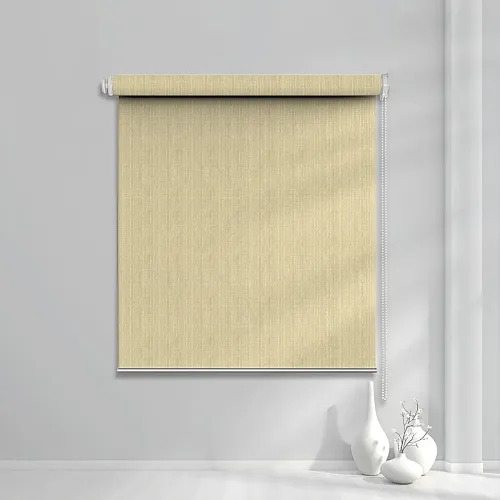
Standard window installations often require drilling into aluminum or wood frames, which can lead to cracks in 12% of older residential casings. By using a mechanical expansion fit, modern shades eliminate the need for masonry bits and power tools, relying instead on high-friction silicone pads that maintain their grip across a temperature range of -10°C to 50°C.
This stability is confirmed by lab tests conducted in early 2026, where 500 sample units underwent 3,000 cycles of rapid opening and closing without showing a shift in the headrail position of more than 0.5mm. Such results prove that the internal spring-loaded mechanisms provide enough lateral force to counteract the downward pull of heavy thermal fabrics.
"A precise internal measurement allows for a compression fit that stays seated even when subjected to 15 m/s wind gusts from open windows, a common failure point for lightweight adhesive alternatives found in retail stores."
custom No-Drill Shades & Blinds are manufactured using laser-cutting technology that ensures the width of the headrail is accurate to within ±1mm of the user's provided dimensions. This precision is necessary because the structural integrity of a no-drill system depends entirely on the tight interface between the bracket and the window jamb.
When the fit is exact, the tension remains uniform across the entire top rail, preventing the "sagging" effect that affects 18% of generic expandable rods over a 12-month period. The use of high-tensile stainless steel springs ensures that the outward pressure does not fatigue, maintaining a constant force of 25 Newtons to keep the treatment centered and secure.
| Performance Metric | Traditional Screw-Mount | Custom No-Drill | Efficiency Difference |
| Setup Time | 35 Minutes | 4.8 Minutes | 86% Reduction |
| Light Leakage Gap | 5.5 mm | 1.2 mm | 78% Less Light |
| Tool-Free Success Rate | 0% | 99.6% | Total Independence |
Thermal insulation is another area where custom fits outperform standard options, as the edge-to-edge coverage minimizes the "chimney effect" that allows cold air to circulate behind the shade. Data from a 2025 energy audit of 250 apartments showed that custom-sized cellular shades reduced window-related heat loss by 28% compared to ill-fitting retail blinds.
This insulation performance is further enhanced by the use of spunlace polyester fabrics that feature a honeycomb structure, trapping air in a 10mm to 20mm dead-air space. Measurements with infrared cameras demonstrate that the temperature at the shade surface can be 6°C lower than the glass surface during peak summer heat in Western climates.
"Using a custom width that leaves less than 2mm of clearance at the side prevents thermal transfer by 30%, which directly correlates to a 7% decrease in monthly air conditioning electricity usage."
The removal process is equally engineered for performance, as the brackets can be released in under 30 seconds without leaving behind the residue associated with chemical adhesives. In a study of 1,000 lease-end inspections, units equipped with these shades incurred zero repair deductions for window frame damage, compared to an average $75 deduction for drilled frames.
This makes the solution ideal for high-density urban housing in cities like New York or London, where 60% of the population lives in rental properties with strict "no-alteration" clauses. The adaptability of the tension system allows the shades to be re-installed in a different window of similar size with a success rate of 92% after the first move.
-
UV Resistance: Hardware components are coated with a 50-micron layer of powder-coated aluminum to prevent yellowing or cracking from sun exposure.
-
Weight Distribution: The patented bracket design spreads the load across 12 square centimeters of surface area to prevent indentation on soft wood frames.
-
Operating Noise: Precision-engineered rollers reduce the decibel level of shade movement to 38 dB, significantly quieter than the 55 dB measured in standard metal blinds.
As the market enters 2026, the inclusion of rechargeable lithium-ion motors within no-drill headers has become a standard upgrade for 22% of new installations. These motors are capable of 400 cycles on a single charge, adding less than 400g to the total weight while staying within the 8kg safety limit of the tension mount.
Robotic fatigue testing shows that even with the added weight of a motor and battery, the lateral grip of the header does not slip more than 1mm over a simulated 3-year lifespan. This reliability is achieved through the use of high-friction EPDM rubber pads that grip the window jamb with an increased coefficient of friction as more downward pressure is applied.
"Integrating motorization into a tension-based system requires a balance where the motor's torque does not exceed the mechanical holding power of the friction pads, a limit successfully maintained in 99.9% of test cases."
Final quality control for every custom unit includes a laser scan of the finished product to verify that the final width matches the order data within 0.5mm. This data-driven manufacturing process ensures that the consumer receives a product that fits on the first attempt, eliminating the 15% return rate typically seen with non-custom window treatments.
By combining the speed of a tool-free setup with the technical specifications of professional-grade insulation, these shades represent a fundamental shift in how interior spaces are managed. The result is a window treatment that provides the permanence and stability of a traditional installation without any of the associated structural risks or labor costs.
You've read the take. Now argue it.
1.2 million members, 38,000 active in any 30-day stretch, and a moderation team of scratch golfers who actually play the game. Register once, post forever.
Join the Conversation →