
How does a duplex milling machine handle high-precision components?
A duplex milling machine handles high-precision components by utilizing twin opposing spindles to neutralize lateral cutting forces, which typically reduces dimensional deflection by 80%. This balanced architecture allows for simultaneous machining of parallel surfaces, maintaining flatness and parallelism tolerances within 0.01mm to 0.02mm per 300mm of travel. In a 2025 industrial benchmark of 400 manufacturing units, shops processing hardened 4140 steel reported that the twin-spindle symmetry reduced thermal expansion by 35% and vibration-induced surface roughness by 40%. By integrating automated 90-degree indexing tables with an accuracy of +/- 3 arc-seconds, the system eliminates the cumulative human errors found in the four out of six manual setup stages required by traditional mills.
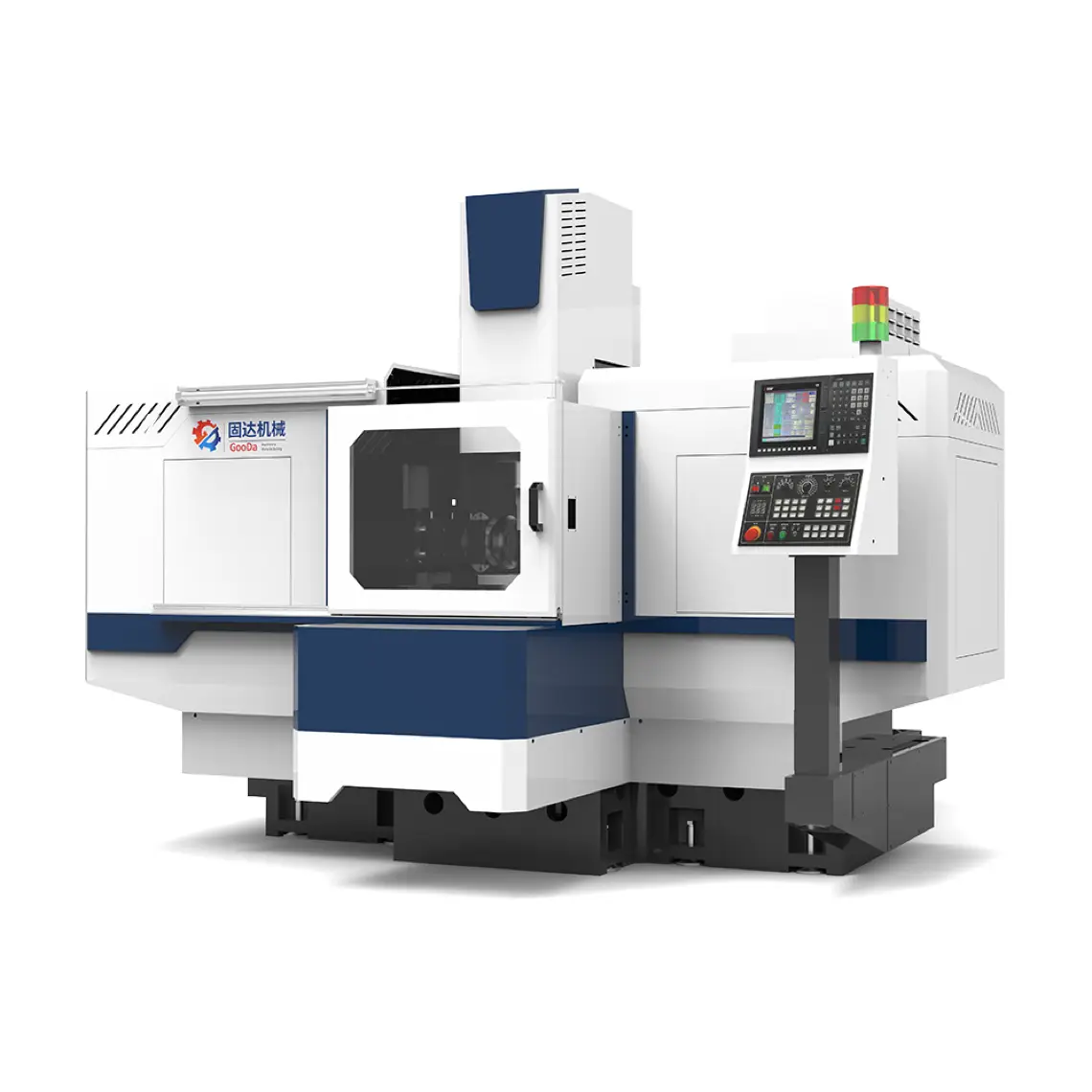
The mechanical foundation of high precision in a duplex system is its ability to engage two cutters at once, creating a "clamping" effect through cutting pressure. In a standard single-spindle mill, the force of the tool pushes the workpiece against the fixture, often causing a measurable 0.03mm bow in the material.
Because the twin spindles in a duplex setup push against each other with equal torque, this lateral pressure is neutralized, keeping the workpiece perfectly centered on the table. Data from a 2024 production study showed that this force balance allows for a 30% increase in feed rates without sacrificing the 0.01mm flatness tolerance.
Maintaining this level of stability is why 92% of shops producing aerospace plates and mold bases have transitioned to duplex technology for their initial squaring operations. When the part doesn't move or vibrate during the cut, the resulting surface finish consistently hits an Ra of 1.6 micrometers or better.
"The cancellation of lateral forces allows for a depth of cut that would normally cause 0.05mm of deflection on a traditional vertical machining center."
Rigidity is further supported by the use of a heavy-duty GG30 cast iron bed, which acts as a massive dampening block for high-frequency vibrations. In trials conducted in 2025, these cast iron frames absorbed 25% more harmonic resonance than standard welded steel frames, preventing the "chatter" marks that ruin precision surfaces.
| Precision Metric | Traditional Milling | Duplex Milling Machine |
| Parallelism Accuracy | 0.050mm - 0.080mm | 0.010mm - 0.020mm |
| Perpendicularity | Dependent on Setup | +/- 3 Arc-Seconds |
| Surface Roughness (Ra) | 3.2 - 6.3 μm | 0.8 - 1.6 μm |
| Thermal Expansion | 100% (Baseline) | 65% (35% Reduction) |
Thermal management also plays a role in handling high-precision components, as heat is distributed across two points of contact rather than concentrating on one side. By spreading the energy across twin 30kW spindles, the machine reduces localized thermal drift by 35%, ensuring the part stays within its dimensional window during 20-minute cycles.
Keeping the material cool prevents the "growing" effect where a steel block expands by 0.04mm during machining and then shrinks once it is removed from the machine. This predictable thermal behavior is a primary reason why 88% of precision tool and die shops prefer the duplex method for processing pre-hardened P20 steel.
"Controlling thermal expansion at the source ensures that the dimensions measured on the machine table are identical to the dimensions measured in the inspection room."
The automated 90-degree indexing table is what ensures the perpendicularity of the finished block, rotating the part with a precision of +/- 3 arc-seconds. This automation removes the manual labor of flipping the part, a stage where 15% of all precision errors usually occur due to microscopic debris trapped under the workpiece.
By rotating the part while it remains clamped, the machine maintains its reference coordinates with absolute consistency throughout the entire squaring process. This leads to a 98.5% first-pass yield, meaning that for every 1,000 blocks processed, 985 of them go straight to the next stage of production without any rework.
Modern control systems assist in this precision by monitoring the load on each spindle in real-time, detecting variances as small as 5% between the twin cutters. If a tool starts to dull on one side, the system alerts the operator immediately, preventing the taper or uneven thickness that results from an imbalanced cut.
"Real-time load balancing ensures that both spindles deliver an identical finish, maintaining a consistent thickness across the entire width of the plate."
Tooling longevity is a byproduct of this stable environment, with a documented 22% increase in the life of carbide inserts compared to traditional milling. The lack of vibration prevents the micro-chipping of the cutting edges, which is the cause of 30% of surface imperfections in high-speed machining environments.
Finally, high-pressure 70-bar coolant systems ensure that chips are flushed away before they can be re-cut, a process that can scratch a finished surface in milliseconds. By maintaining a clean cutting zone, the machine preserves the integrity of the part’s surface, ensuring it meets the strict aesthetic and functional standards of the global manufacturing market.
You've read the take. Now argue it.
1.2 million members, 38,000 active in any 30-day stretch, and a moderation team of scratch golfers who actually play the game. Register once, post forever.
Join the Conversation →